.webp)
Not just LinkedIn. Social media in the HR professional's work
How can you effectively search for candidates among your customers by leveraging the synergy between marketing and recruitment activities? In previous posts, we focused on "outbound" marketing: email and phone campaigns, and the creative use of a company's Careers page or physical branch spaces. This time, we will devote more attention to social media and candidate interaction.
98% of recruiters use social media when looking for job candidates. This figure is essentially the same as the percentage of headhunters who use LinkedIn (97%). While these data points are hardly surprising, the fact that only 12% of them use all three of the most popular platforms (LinkedIn, Facebook, and Twitter) simultaneously is food for thought. These figures refer to the United States. The situation in Poland is very similar, with two significant differences. According to the latest Lee Hecht Harrison DBM report, "Social Media in Recruitment," the local platform GoldenLine remains a significant source for acquiring candidates in our country (cited by 77% of surveyed recruiters). Twitter is significantly weaker here than across the ocean – only 3% of respondents use it in their recruitment processes. This means that HR departments have an undiscovered social continent ahead of them, one that is densely populated with candidates. According to Megapanel PBI/Gemius research, 20 million Poles already had Facebook accounts in September 2015. 3.2 million users use Twitter. In the reality of an employee-driven market, toward which we are increasingly heading, most people in this mass will, at best, be passive candidates. To draw their attention to our brand, we must offer them a distinct Employer Value Proposition (EVP) expressed through interesting content published on the social media platforms they frequently visit. It can be compared to the marketing Unique Selling Proposition (USP), which brands communicate intensely to create a fundamental sales differentiator. In other words, EVP is used to position a brand in the job market. Of course, choosing a place of employment is a more complex matter than deciding on a specific product or service. It is determined by an entire bundle of factors, and it would be difficult to isolate one leading one. However, this is not an argument for abandoning attempts to stand out from other employers' offers. On the contrary – for a potential employee to even want to familiarize themselves with the employment conditions in our organization, we must first make them want to pay attention to it.
Unlike most company Careers pages, employer fan pages appeal more to emotional than tangible benefits. They focus on values, vision, and the engagement of employees and stakeholders. On one hand, this should come as no surprise. According to research conducted by the EBI (an institute created by Brett Minchington, the man who coined the term "EVP"), nearly 1/3 of employees believe that work must, above all, be "interesting." Career development opportunities come in second. This leads brands to emphasize what is extraordinary, celebratory, and easily distinguishable in the narrative about their workplace. Daily duties and the realities associated with a given position rarely break through to the potential candidate's consciousness. In this regard, the case of the German retail chain Aldi serves as an interesting warning. While looking for candidates for the key position of Regional Sales Manager, the company focused its message on high salaries, attractive benefits, and broad development opportunities within the corporate structure. The Aldi campaign resembled the idealized image of products and services known from traditional advertising. The problem is that in employer branding, greater care is needed to maintain a balance between the promotional and informational layers. Otherwise, a company may struggle with similar difficulties to the German enterprise: a flood of CVs, large numbers of satisfactory applications, filled vacancies, and... a record number of Regional Sales Managers who quit before completing their probationary period. The candidates who came for interviews lacked awareness of what the daily tasks and responsibilities of the position actually looked like. The realities of working in the store did not meet the expectations raised by the attractive advertising message, and they were unable to fulfill the duties associated with the role.
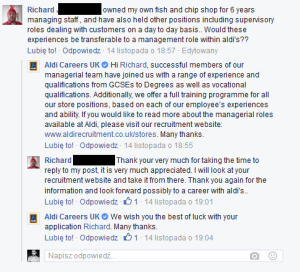
A quick look at the Aldi Careers fan page shows how fundamentally the company has changed its strategy. Currently, its messages are characterized by minimalism and modesty. When the autonomy enjoyed by managers is mentioned, words about responsibility follow immediately. When someone from the company's HR department speaks, they first point to the experience and skills the candidate must possess, and only then to the salary and benefits. All of this, however, takes place in an atmosphere that is extremely friendly toward the potential candidate. The people running the Careers fan page are happy to answer inquiries about working at Aldi in general, as well as for specific positions. They provide advice, dispel doubts, and post useful links. They never forget to say "thank you," "please," and "you're welcome."
Of course, if a company has the opportunity (and real grounds) to present itself as an interesting employer, it should not act overly passively for fear of not keeping the promise made by the brand. When we look at the Travel Planet Careers fan page, it is not hard to believe that the company's employees sometimes do interesting things, and above all: that they are interesting people themselves. We see them speeding in a convertible through Havana, climbing mountain peaks, and even giving interviews to Indonesian television. We can also read about their participation in the Wrocław Business Run (3rd place for the relay team), and even browse the private blog of one of the employees (naturally about travel), which her employer's fan page is happy to link to. All of this makes us feel more motivated to respond to the slogan: "join the #EkipaTravelPlanet."
It turns out that it is not just full-time employees who do not want to be bored in the office. Interns are also becoming increasingly demanding. To meet their needs, Wyborowa Pernod Ricard has dedicated a significant portion of its Facebook communication to this group of candidates. They can learn, among other things, about the tasks awaiting them during their internship, the skills they will develop, and internal competitions they can enter. Many posts relate to how to perform well in a job interview, how to prepare a CV, and how to take care of one's LinkedIn profile. Concrete information is diversified with photos from integration parties or biographies of standout interns. On the fan page, you can also find more entertaining content, such as a photo of Robert Lewandowski captured while celebrating the promotion to the European Championships with a bottle of Pernod Ricard champagne in his hand.
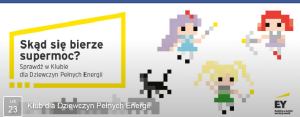
Organizations should also not forget that the ultimate goal of online promotion is to move the relationship with the candidate to as real a ground as possible. EY is happy to provide opportunities to get to know each other. The company's Careers fan page is dominated by various events. To give a few examples: a meeting with Polish students studying at British universities, an invitation to the Club for Girls Full of Energy, aimed at female technical students, or a meeting with a football club president talking about the financial side of football. The company skillfully oscillates between entertainment (case study: "What if there were taxes in Tolkien's world?" at the University of Warsaw Student Council Hall) and reliable knowledge (lecture: "VAT fraud and due diligence" at the Supreme Administrative Court). If events are announced, they naturally post (photo) reports. Content to enrich the fan page then creates itself, effectively.
The second most popular social network proves that 140 characters are enough to formulate an engaging employer branding message. If marketers have enough space to promote products, why shouldn't recruiters use it to draw attention to job offers? Especially if they have catchy hashtags and a dedicated community around their brand that will be happy to click "like," "follow," and "share."
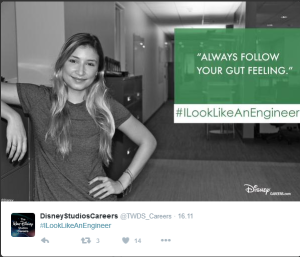
One of the more interesting cases provided by Twitter is the Disney Careers page. The owners of Mickey Mouse and Star Wars, among others, know their audience – and candidates – well. What could interest a 3D graphic designer more than a short presentation of what the creative process at Disney looks like behind the scenes? Browsing posts marked with the hashtag #DisneyTech, we will learn, among other things, how to create a successful snow animation. Enthusiasts of "asynchronous contact mechanics" and "topological vectorization" will also find something for themselves. All this gives a strong sense that by taking a job at this organization, a young graphic designer will be able to learn a lot. People looking for lighter content might be interested in which Disney characters are an inspiration for individual employees and why. A lot of space is also devoted to scenes from life and the history of the company. Disney also makes use of situational marketing. When the feminist hashtag #ILookLikeAnEngineer was gaining popularity, Disney posted photos of its female IT employees on its Twitter, marked exactly that way. It thus expressed full solidarity with the slogan of equal rights for women in the field of computer science. This translates into obvious image benefits and, at the same time, helps to attract the attention of women who are not involved in coding.
The Condé Nast Careers profile shows, in turn, that a Careers page on social media can be well-managed even at the capital group level. The media giant treats this account as a kind of aggregator of content, job offers, scenes from life, and curiosities relating to all the brands it holds. And there is plenty to choose from here: in one moment we are invited to a meeting with a "New Yorker" journalist, then we admire "Vogue" columnists at a fashion show, and next we are offered a read of an article from the latest issue of "Wired." There are days "dedicated" to a selected title. Some time ago, it was "Allure Magazine." In the morning, we met the head of the design department and her studio (above the photo, a rhetorical question: "who wouldn't want to work with her?"). In the afternoon, a text about the awards received by "Allure" employees was linked. And for the evening – #JobAlert. The magazine is looking for Sales Assistants. However, Condé Nast does not limit itself to recruitment. The Twitter profile is also used for onboarding. New employees are tagged in a post where they can receive congratulations. This is an extremely simple, but nice form of welcome for someone starting a new career path. It is also information for all potential candidates that the company knows how to build a good work atmosphere and cares about the team.
I won't hide the fact that when I was collecting materials for this text, American Accenture immediately caught my attention. It turns out that this company is happy to use Twitter to acquire referrals. Successive posts with job offers emphasize the aspect of recommendations ("do you know someone who...?", "could you recommend someone for...?"). The entire strategy looks very consistent – from employee retweets, through the promotion of posts about their successes at work, to the exchange of experiences in special mentoring sessions.