Don't Pay Employee Referral Rewards Yourself
A job referral program typically involves rewards for successful recommendations. Even the simplest reward system, however, comes with numerous challenges. The best way to handle them is not to pay the rewards yourself — but to entrust this to a company that can also design and run your entire referral program end to end.
Sounds simple, but…
More than one person may wonder whether this isn't an exaggeration. After all, their organization pays out salaries, bonuses, and awards all the time, so why should a referral bonus be any more problematic? There are at least several reasons:
You need to prepare a reward plan
First: we need to decide who gets rewarded — employees only, or perhaps also alumni, interns, and candidates for other positions? Does everyone receive the same rewards, or do we want to give our own team special treatment? Second: we need to decide how we reward — with cash, vouchers, material gifts, or experiences. Third: is the bonus due only for hiring a referred person, or for every desired activity (e.g. sourcing a CV)? Fourth: do we split the bonus into installments, and who will remember the next payout?
You need to take care of procedures
It's not just about the specific provisions, but also about their clarity and communication. Who in the organization is responsible for transferring rewards? How will we know who should be rewarded? How will the referrer learn that a reward has been granted, and how can they file a complaint? How should rewards be settled for tax purposes? When rewarding non-employees, additional questions arise: on what basis and under what procedure should the reward be paid?
You need to protect the organization against fraud and regulatory breaches
If there's money to be made, people will try to game the system. The reward mechanism must be designed in a way that limits the risk of abuse without over-bureaucratizing the process. It's also worth remembering tax obligations — e.g. social security contributions on employee remuneration or settlements for people from outside the organization. Each form of gratification carries different legal and fiscal obligations.
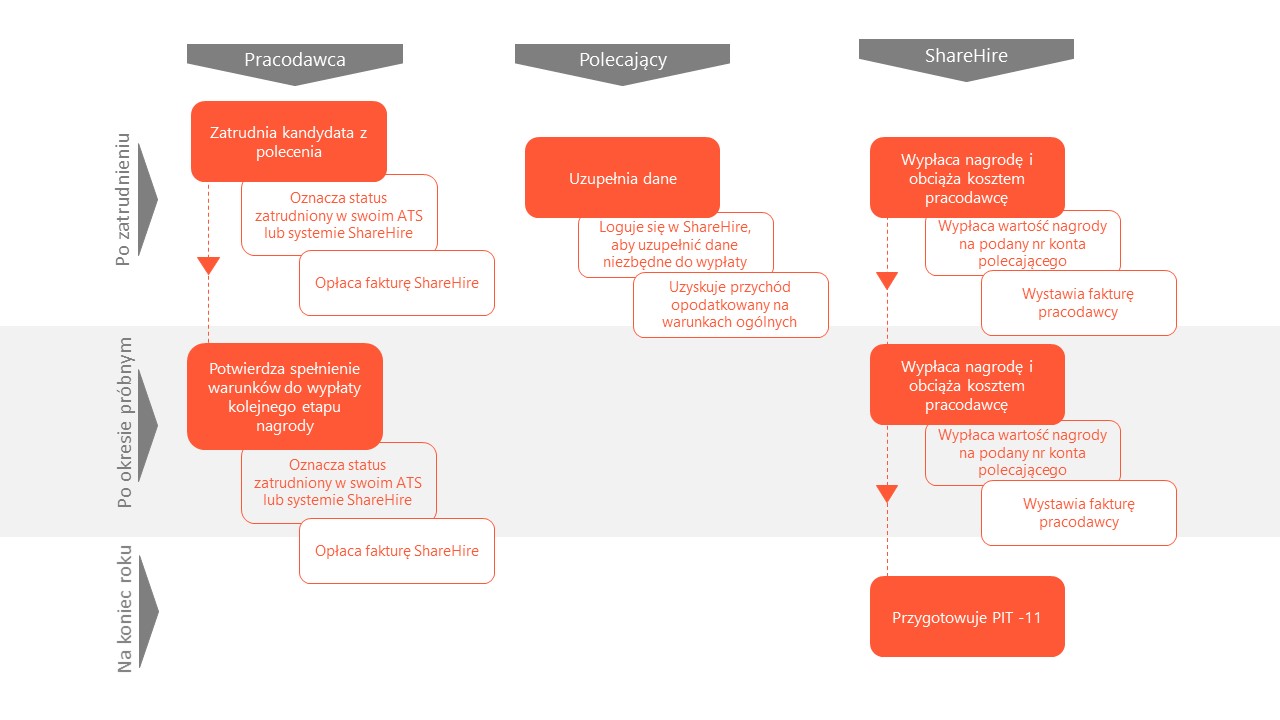
Better to focus on recruitment, not bureaucracy
Instead of focusing on screening and hiring new employees, the recruiter wastes time on legal and tax consultations, having to step into the roles of an accountant or internal communications specialist. To avoid this, it's best to hand this entire back office over to a specialized provider.
You get a ready-made reward plan
A partner will support us in developing a reward plan, benchmarking our organization against the market and the competition. They can also provide access to attractive referral rewards, e.g. through partnerships with benefit platforms.
You get proven legal and tax solutions
A reward payout system based on a public promise makes it possible to avoid legal and tax problems. Each referrer receives the full gross value of the reward and then handles their own tax settlement.
You get rid of stress and excess work
A company that hands reward administration over to a partner doesn't have to worry about personal data administration, tax matters, or complaints. The provider handles the help desk and monitors the process, ensuring its effectiveness and regulatory compliance. This means greater budget flexibility and a lighter load for HR, accounting, and payroll teams.
To sum up: outsourcing the administration of a referral program lets the organization focus on recruitment, leaving all administrative duties to a specialized provider.